
Why does gin turn cloudy – and why that’s a good thing?
Spirit of the Cascade Imatra Dry Gin is not designed to be neutral, stripped, or overly processed. It is made with a deliberate choice: to preserve as much of the natural aromatic complexity of our botanicals as possible.
During distillation, compounds from juniper, spruce shoots, cardamom, lemongrass and other botanicals are carried into the spirit. These compounds are primarily essential oils, chemically known as terpenes. They are responsible for the aroma, mouthfeel, and depth that define the character of the gin.
These compounds are soluble in alcohol, but their solubility depends on both alcohol strength and temperature.
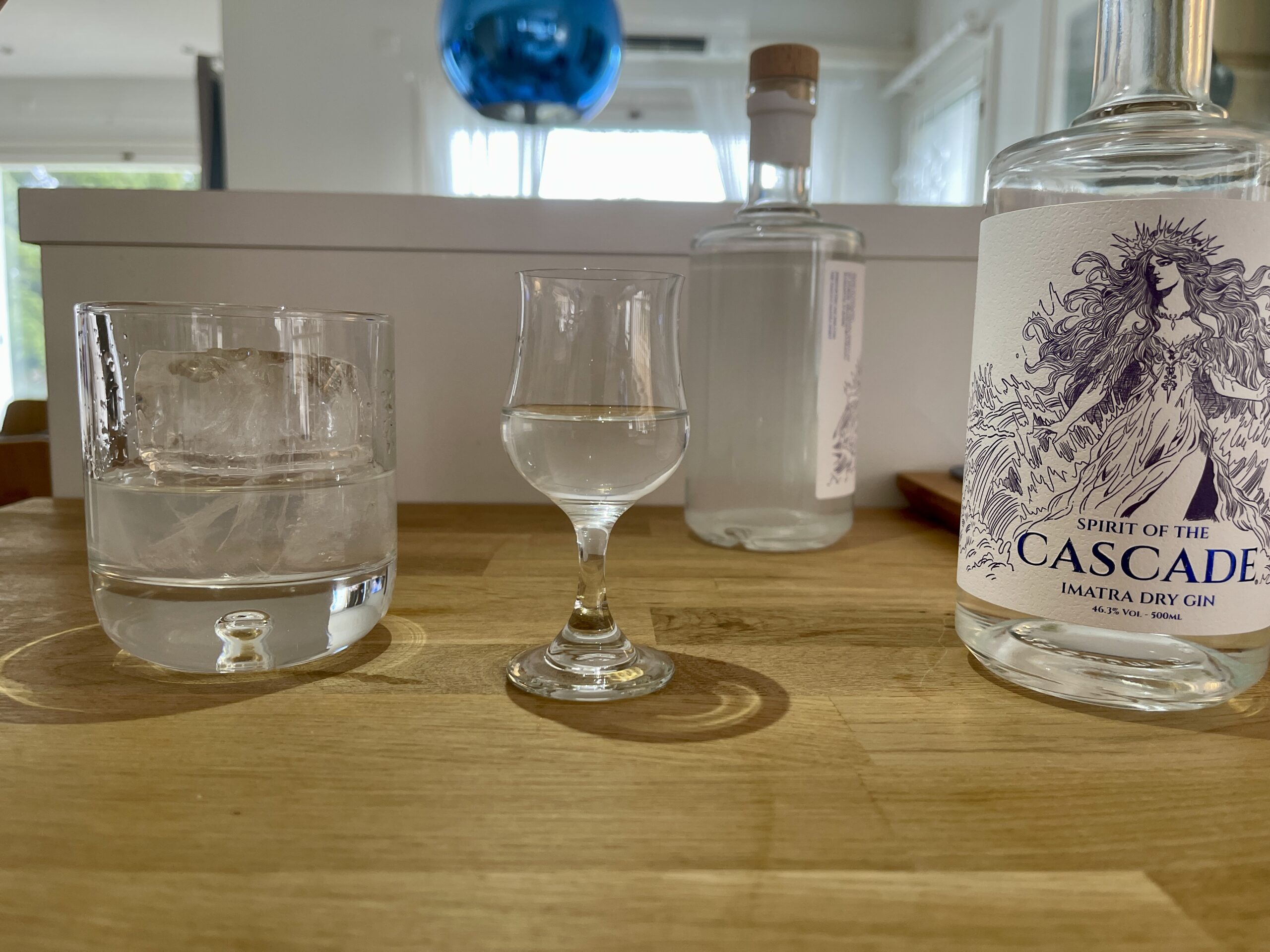
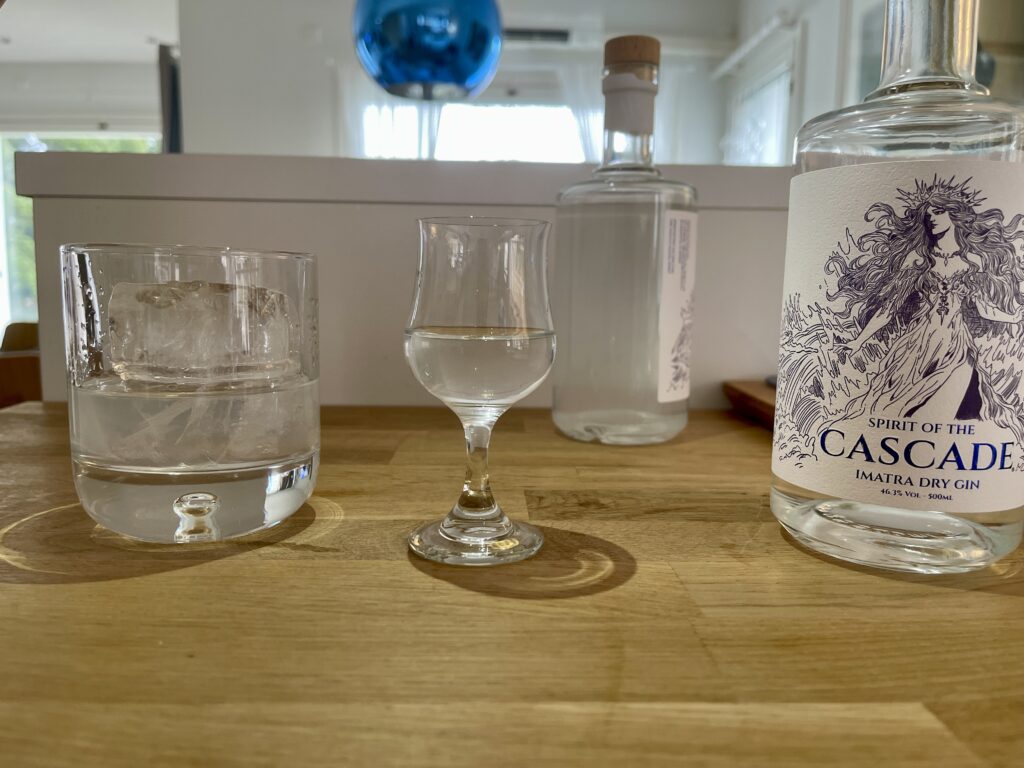
At our bottling strength of 46.3% ABV, the gin holds a high concentration of these natural aromatic oils. When the temperature drops, the solubility of these compounds decreases. If the temperature falls below a certain threshold, a small portion of these oils forms microscopic droplets. This causes light to scatter, and the gin may appear cloudy. This is known as chill haze, where the aromatic oils momentarily lose the ethanol’s bind, thus causing the spirit to “change color” or “turn cloudy”.
This is by design, and desirable.
This means that the gin has proper amount of aromatic oils which in turn means the gin has character, flavors and complexity. Nothing has degraded, reacted, or spoiled. The composition of the gin remains unchanged. When the temperature rises again, the oils re-dissolve naturally, and the gin regains its clarity.
Based on our observation and continuous testing in different temperatures, the threshold for this effect is around +18°C. For this reason, we recommend storing the product above this temperature if you wish to maintain visual clarity. Two hours in the fridge will turn the product cloudy. The same effect is visible if you drink the gin on the rocks or from a chilled glass. This is also why your cold gin tonic changes color once mixed.
However, the presence of this phenomenon is a direct result of a conscious decision: we do not remove these aromatic compounds through aggressive filtration. Doing so would result in a visually stable product, at the cost of flavor, structure, and identity.
We choose flavor and complexity.
Cloudiness at lower temperatures is a desirable quality and a visible expression of the gin’s natural composition.
-in Finnish-
Miksi gini samenee – ja miksi se on hyvä asia?
Spirit of the Cascade Imatra Dry Gin ei ole suunniteltu neutraaliksi, pelkistetyksi tai liiallisesti prosessoiduksi tuotteeksi. Se on valmistettu tietoisella säilyttämään mahdollisimman paljon ainesosien luonnollista aromaattista monimuotoisuutta.
Tislauksen aikana katajan, kuusenkerkkien, kardemumman, sitruunaruohon ja muiden kasviuutteiden yhdisteet siirtyvät tisleeseen. Nämä yhdisteet ovat pääasiassa eteerisiä öljyjä, kemiallisesti terpeenejä. Ne ovat vastuussa aromista, suutunteesta ja syvyydestä, jotka määrittelevät ginin luonteen.
Nämä yhdisteet liukenevat alkoholiin, mutta niiden liukoisuus riippuu sekä alkoholipitoisuudesta että lämpötilasta.
Pullotuksen alkoholipitoisuudessa 46,3 til-%, gini sisältää korkean pitoisuuden näitä luonnollisia aromaattisia öljyjä. Kun lämpötila laskee, näiden yhdisteiden liukoisuus vähenee. Jos lämpötila laskee tietyn kynnyksen alle, pieni osa näistä öljyistä muodostaa mikroskooppisia pisaroita. Tämä saa valon siroutumaan, ja gini saattaa näyttää samealta. Tämä tunnetaan kylmäsamentumisilmiönä, jossa aromatiset öljyt hetkellisesti menettävät etanolin siteen, aiheuttaen tisleen “värin muuttumisen” tai “samentumisen”.
Tämä on suunnitteltua ja toivottavaa.
Tämä tarkoittaa, että ginissä on oikea määrä aromaattisia öljyjä, mikä puolestaan tarkoittaa, että ginissä on luonnetta, makuja ja monimutkaisuutta (complexity). Mikään ei ole pilaantunut tai huonontunut. Ginin koostumus itsessään pysyy muuttumattomana. Kun lämpötila jälleen nousee, öljyt liukenevat luonnollisesti uudelleen, ja gini saa kirkkautensa takaisin.
Havaintojemme ja jatkuvan testauksen perusteella eri lämpötiloissa, tämän ilmiön kynnys on noin +18°C. Tästä syystä suosittelemme tuotteen säilyttämistä tämän lämpötilan yläpuolella, jos halutaan säilyttää tuotteen visuaalinen kirkkaus. Kaksi tuntia jääkaapissa samentaa tuotteen. Sama ilmiö näkyy, jos juot ginin jäillä tai jäähdytetystä lasista. Tästä syystä myös kylmä gin tonicisi voi “vaihtaa väriä” miksauksen jälkeen.
Tämän ilmiön esiintyminen on suora seuraus tietoisesta päätöksestä: emme poista näitä aromaattisia yhdisteitä aggressiivisella suodatuksella. Aggressiivisen suodatuksen seurauksena syntyisi visuaalisesti vakaa tuote, mutta maun, rakenteen ja identiteetin kustannuksella.
Me valitsemme maun ja monimutkaisuuden.
Samentuminen alhaisemmissa lämpötiloissa on toivottava ominaisuus ja näkyvä ilmaus ginin luonnollisesta koostumuksesta.